

Mike Tomlin walked away from the Pittsburgh Steelers after nineteen years without a single losing season. That’s not a typo—nineteen straight winning seasons, zero sub-.500 records. In a league where coaches get fired for missing the playoffs once, Tomlin voluntarily stepped down from one of the NFL’s most stable franchises. Here’s what makes this even stranger: the Steelers didn’t want him to go.
This wasn’t a firing. Twenty-four hours after a humiliating 30-6 playoff loss to Houston, with “Fire Tomlin!” chants still echoing through Acrisure Stadium, the coach called it quits himself. Art Rooney II’s statement practically begged him to reconsider, calling Tomlin’s record “likely never to be duplicated.” Yet Tomlin left anyway. A source close to him explained simply: “What is there left to chase?”
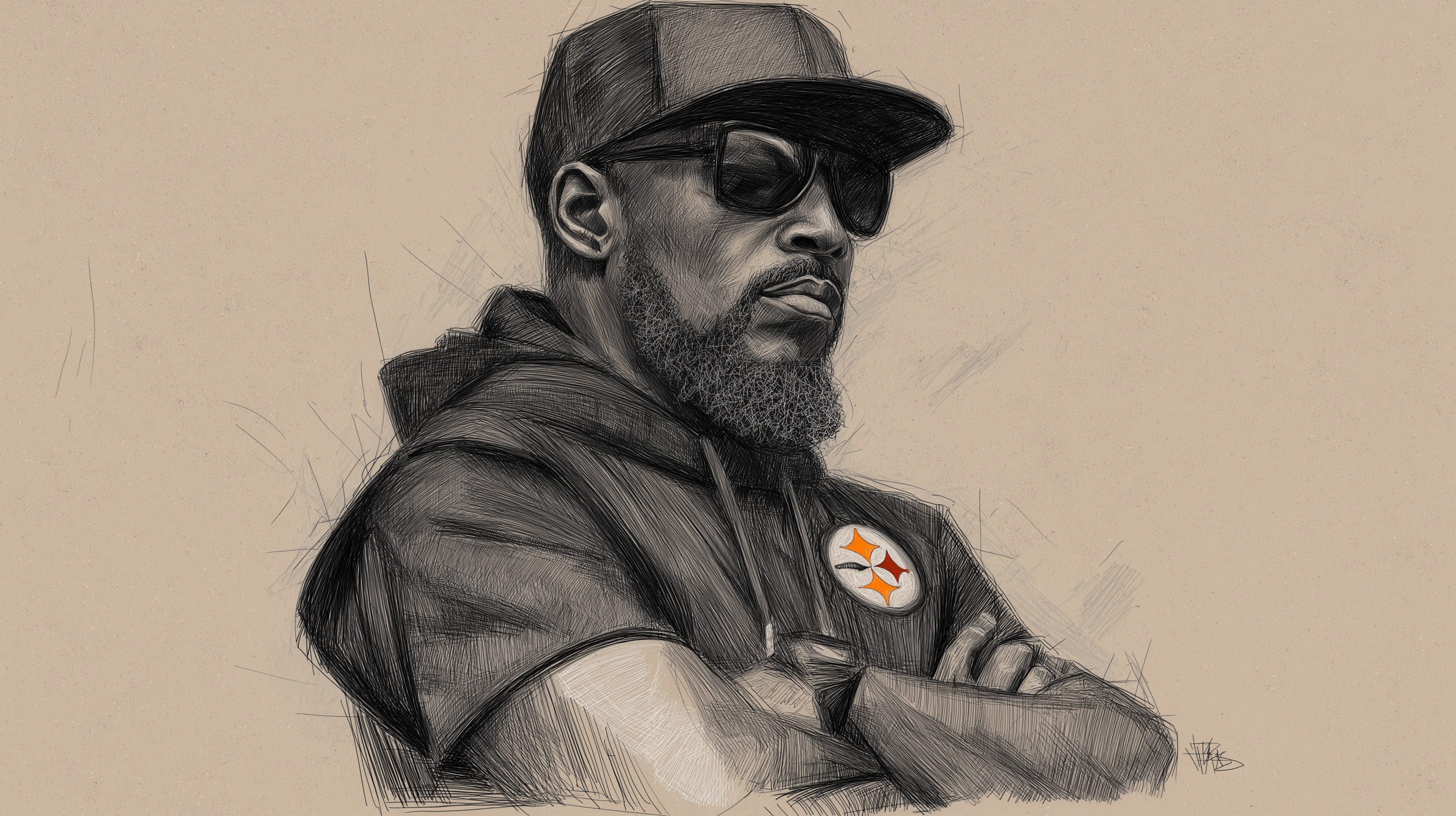
Three Coaches in Fifty-Six Years
The Steelers haven’t hired a head coach since 2007. They’ve employed exactly three coaches since 1969—Chuck Noll, Bill Cowher, and Tomlin. That’s three coaches in fifty-six years, a stability that makes Supreme Court appointments look temporary. This organization doesn’t do coaching searches. GM Omar Khan is about to lead his first one, and as ESPN’s Marcus Spears noted, “Really, the pressure is on Omar Khan. Like, that’s the name that everybody should be paying attention to.”
But let’s examine what actually happened here through the lens of principal-agent theory. Different stakeholders wanted different things. Ownership valued stability and brand consistency—no losing seasons meant no embarrassment, no chaos, no rebuilding. Fans wanted playoff victories, not regular season competence. And Tomlin? He wanted a championship legacy that had slipped away after his early success.
The Numbers That Haunted Him
The numbers tell the story. Tomlin won five of his first six playoff games between 2007 and 2010, including a Super Bowl victory over the Arizona Cardinals. Then came the drought: 3-11 in his final fourteen playoff games, culminating in a seven-game losing streak that tied the NFL record. That’s not just bad luck. That’s a pattern that eats at a competitor’s soul.
Think about Marvin Lewis with Cincinnati—another defensive coach who couldn’t win in January. Lewis went 0-7 in the playoffs across sixteen seasons before the Bengals finally fired him in 2018. The difference? Lewis was pushed out. Tomlin jumped.

When “Pretty Good” Becomes Torture
This reveals something fundamental about how elite performers process plateau performance. When you’ve achieved everything except the thing that matters most, “pretty good” becomes psychological torture. Tomlin’s 193-114-2 regular season record meant nothing when January arrived. The Steelers would make the playoffs, lose immediately, and restart the cycle. Groundhog Day in black and gold.
Aaron Rodgers defended Tomlin this week, saying “Mike T. has had more success than damn near anybody in the league for the last 19, 20 years.” That’s true by one measure. By another—the measure Tomlin apparently cared about—he’d been failing for fourteen years straight.
Pathological Stability
The organizational dynamics here fascinate me. Pittsburgh’s institutional inertia is legendary. They don’t make rash decisions. They don’t chase trends. They definitely don’t change coaches every few years like the Jets or Browns. This conservatism served them well for decades. Three coaches since Nixon was president? That’s not normal. That’s pathological stability.
But stability can become a trap. When “never having a losing season” becomes your organizational identity, you optimize for floor instead of ceiling. You draft safely. You coach conservatively. You avoid the kind of risks that either flame out spectacularly or win championships. You become the NFL’s most successful mediocrity.
Khan’s Impossible Choice
Khan now faces an impossible choice. Does he maintain the Steelers’ traditional approach—hire a defensive-minded coach who embodies “Steeler football” and promises another two decades of competent stability? Or does he break the mold, bringing in an offensive innovator who might deliver either a championship or chaos?
The candidates being floated tell the story. Brian Flores fits the traditional mold—defensive expertise, Steelers ties through his Pittsburgh roots. But names like Ben Johnson (Lions OC) and Joe Brady (Bills OC) represent something different entirely. Young, offensive-minded, unproven as head coaches. High ceiling, low floor.
This is where principal-agent theory gets interesting. Whose preferences win when the principals disagree? The Rooney family has traditionally valued institutional stability above all. But what happens when your steady-hand coach walks away? When the agent (Tomlin) rejects the principal’s (ownership’s) definition of success?
Mutual Imprisonment
We don’t know what internal conversations preceded this decision. Maybe Rooney pushed harder than his statement suggests. Maybe Khan whispered doubts about roster construction versus coaching. Maybe Tomlin simply looked at his seven-game playoff losing streak and decided he’d rather leave a legend than become a punchline.
Here’s what I think happened: Tomlin recognized that organizational inertia had become mutual imprisonment. The Steelers wouldn’t fire him—nineteen winning seasons bought infinite job security. But that same security prevented the bold moves needed for championship contention. Can’t rebuild with a Hall of Fame coach. Can’t take massive risks when you’re winning nine games every year. Can’t blow it up when it’s not really broken.
So Tomlin did what the organization couldn’t: he blew it up himself.

The Counter-Argument
The counter-argument is obvious. Maybe Tomlin was pushed. Those “Fire Tomlin!” chants meant something. The twenty-four hour gap between playoff humiliation and resignation suggests external pressure. Khan might have delivered an ultimatum we don’t know about. Voluntary resignations often aren’t.
But the evidence points toward genuine choice. Rooney’s statement reads like a eulogy for someone who’s still alive. No organization lets a coach with Tomlin’s record walk without trying to keep him. The “nothing left to chase” quote from Tomlin’s inner circle rings true—when you’ve done everything except the thing that defines greatness, what’s left?
This exposes a brutal truth about elite performance: sometimes good enough really is the enemy of great. Not because it fails, but because it succeeds just enough to prevent the painful changes necessary for transformation. Tomlin’s Steelers were a Fortune 500 company with consistent profits but no growth—respectable, reliable, and going nowhere.
What Happens Next
What happens next will define the Steelers for a generation. Khan faces his first real test as GM. Does he play it safe with Brian Flores and another twenty years of defensive stability? Or does he roll the dice on offensive innovation and accept the possibility of actual losing seasons?
I think Tomlin’s departure forces their hand toward risk. When your “safe” coach voluntarily abandons ship, maintaining status quo becomes impossible. The organizational inertia is broken. For the first time since 2007, everything’s on the table.
Watch what Pittsburgh does next. If they hire defensively—another Tomlin, another two decades of nine-win seasons—they’ll have learned nothing. But if they swing for the fences? If they embrace the possibility of failure in pursuit of greatness?
Then maybe Tomlin’s greatest gift to Pittsburgh wasn’t nineteen winning seasons. Maybe it was knowing when to leave.